

After several years of record-breaking firearm demand, the market is shifting.
Foot traffic isn’t what it was in 2020. Panic buying has cooled. Political urgency has eased. And many dealers are starting to feel something they haven’t felt in a while:
A slower market.
But here’s the opportunity:
When new gun sales soften, used gun sales often become the lifeline that keeps dealers profitable — if they’re managed correctly.
Let’s break down what’s happening — and why investing in your used gun program (with the right tools) could be the smartest move you make in 2026.
Why Gun Sales Are Slowing in 2026
Several macro factors are reshaping firearm demand.
1. Post-Pandemic Demand Normalization
From 2020 through 2023, the firearm industry saw historic surges driven by:
- Pandemic uncertainty
- Political climate
- Regulatory fear
- First-time buyer spikes
That wave has passed.
Many customers who rushed to purchase already own what they need. Urgency has declined.
2. Political Environment Shift
In periods of regulatory uncertainty, firearm purchases spike.
But when buyers feel politically secure, urgency fades.
With a Republican administration and reduced regulatory pressure, the “buy it before it’s restricted” mindset weakens — and so does impulse demand for new inventory.
3. Economic Pressure & Discretionary Spending
Inflation and tighter household budgets are reshaping purchasing decisions.
In softer economies, buyers shift toward:
- Value purchases
- Budget-friendly options
- Trade-ins instead of new buys
High-MSRP firearms become harder to move.
4. Inventory Overhang from the Boom
Many stores stocked aggressively during peak demand.
Now, some of that inventory is aging.
And here’s the quiet margin killer:
Inventory that sits too long erodes profit and cash flow.
Why Used Gun Sales Often Perform Better in Soft Markets
When demand cools, buyer psychology changes.
Consumers become:
- More price sensitive
- More comparison-driven
- More value-focused
That’s where used firearms shine.
1. Used Guns Offer Pricing Flexibility
New firearms are constrained by:
- MAP policies
- Manufacturer pricing
- National competition
Used guns?
You control the price.
That flexibility allows dealers to:
- React to local demand
- Adjust quickly
- Protect margin
But pricing flexibility only works if pricing is accurate.
And that’s where most stores struggle.
2. Margins Are Typically Stronger on Used
New guns often carry thin margins, many dealers working to make 12% on these new firearms.
Used guns allow:
- Greater markup control (averaging between 30-40%)
- Negotiation room
- Strategic margin management
In a slower market, margin discipline matters more than volume alone.
3. Used Inventory Drives Traffic
In softer markets, buyers hunt value.
Well-priced used firearms:
- Create urgency
- Bring repeat buyers
- Generate trade-ins
- Increase counter conversations
Used inventory becomes a traffic engine.
The Real Risk in a Slowing Market: Mispricing
Here’s where things get dangerous.
In boom cycles, pricing mistakes get forgiven.
In slow cycles, they get exposed.
Common dealer challenges:
- Relying on outdated blue book values
- Anchoring to peak 2021 comps
- Overestimating condition premiums
- Letting inventory sit too long without adjustment
When the market shifts, static pricing models fail.
Dealers need dynamic pricing intelligence.
This Is Where Slingit Changes the Game
Used guns are only a lifeline if they’re priced correctly and turned efficiently.
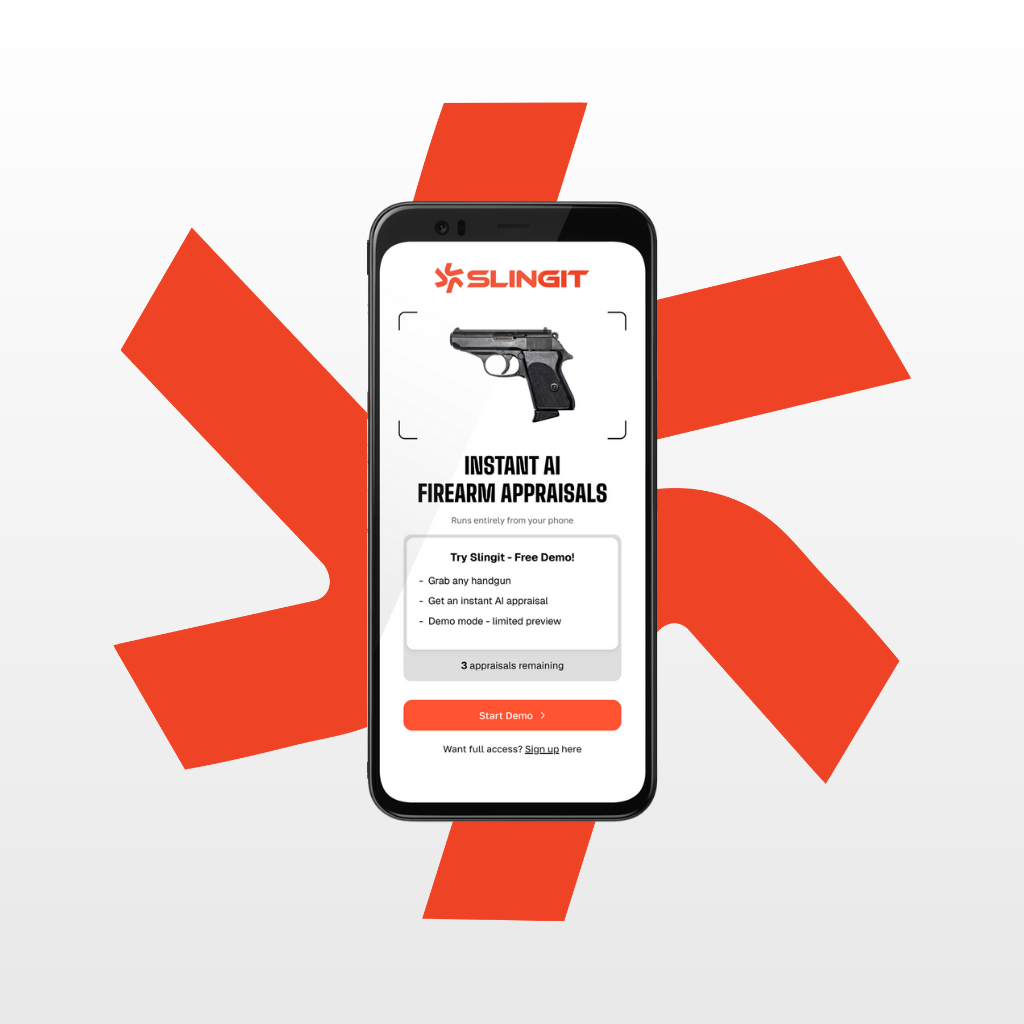
That’s exactly the problem Slingit was built to solve.
With Slingit, dealers can:
Instantly Identify the Exact Make, Model, and Variant
No guessing. No relying on one “expert” employee to know exactly what's in front of you.
See Real Market Pricing & Comps
Not outdated book values — but current, market-informed pricing data.
Make Confident Buy Decisions at the Counter
Know what to pay.
Know what to list at.
Know how fast it should move.
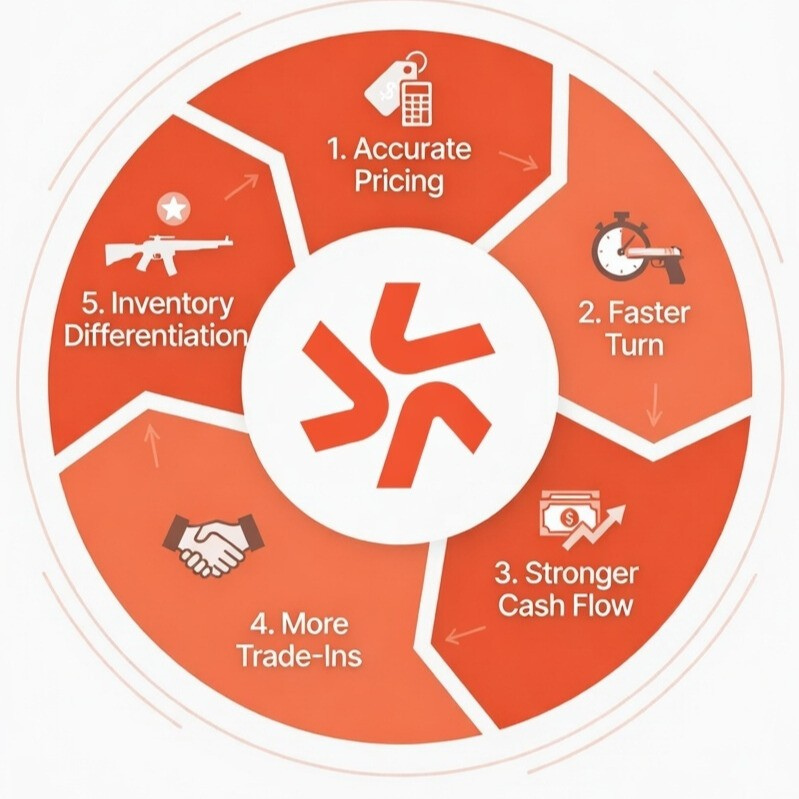
Turn Inventory Faster
Accurate pricing reduces overhang and increases cash flow velocity.
In a slowing market, confidence matters.
When demand tightens, you can’t afford to overpay — and you can’t afford to let inventory collect dust.
Slingit gives dealers clarity in both directions.
Why More Dealers Are Investing in Used Gun Programs
Across the country, forward-thinking FFLs are:
- Expanding trade-in programs
- Offering stronger cash-buy options
- Marketing used inventory aggressively
- Investing in tools that improve appraisal accuracy
Why?
Because used guns offer:
- Margin control
- Inventory differentiation
- Faster reaction to demand shifts
- Value positioning for budget-conscious buyers
But none of that works without pricing precision.
That’s where technology becomes a competitive advantage.
The Competitive Advantage in 2026: Pricing Discipline
The stores that outperform in slower markets aren’t the ones with the most inventory.
They’re the ones with:
- Accurate acquisition pricing
- Faster inventory turns
- Healthy margins
- Data-informed decisions
Used guns aren’t automatically profitable.
They’re profitable when:
- You don’t overpay
- You don’t overprice
- You don’t let them sit
Slingit exists to remove that guesswork.
The Bottom Line
Gun sales may not be at 2020 highs.
But opportunity still exists — especially in used inventory.
In softer markets:
- Margin matters more
- Velocity matters more
- Accuracy matters more
Dealers who treat used guns as a strategic revenue engine — and equip their staff with the right tools — will outperform those who rely solely on new inventory volume.
The market has shifted.
The question is:
Are you pricing for yesterday’s market — or today’s?


.png)